Terminal Uniqueness In recovery circles, you sometimes hear the phrase “terminal uniqueness.” That’s the belief that we’re different from everyone else, more sensitive, more romantic, special. We think we’re better than those “losers” who go to twelve-step groups, or we decide treatment programs aren’t for us because we know more than the counselors who lead the groups. Claiming specialness is a great way to avoid taking responsibility or having to change. Not all addicts feel “special,” of course, and you don’t have to have an addiction to suffer from terminal uniqueness. Regardless of the issues we face in life, when we convince ourselves we’re different, or that diets, programs, or…
-
-
In Death Is Life
Facing Our Deaths As a chaplain, I spend a lot of time around death. I talk about death with patients and colleagues. Sometimes it’s easy to forget that dying isn’t a normal topic of discussion for most people. At least people in this country. In many cultures, death is still a common part of life. You see that in the Buddhist story of the mustard seed medicine. In the Buddha’s town lived a young mother named Kisa whose only child died from a fever. No one could comfort her. She carried her son’s dead body around with her as if by doing so she could make him live again. She…
-
In Faithfulness Is the Salvation of the World
Faithfulness and Lamplighters What does it mean to be faithful? Does it mean always telling the truth to the people you love? Is it being monogamous? Perhaps it means obeying God. Can you be faithful to strangers? What about co-workers or employers? In Antoine de Saint-Exupéry’s The Little Prince, a lamplighter is faithful to his orders. Every evening at sunset, he uses a torch to light a flame lantern. In the morning, at sunrise, he blows it out. The job started out pretty good, except that over the years, the revolutions of his tiny planet sped up until now a day lasts only one minute. This means the lamplighter can…
-
The Wisdom of Escape
Being Mindful In her book The Wisdom of No Escape, the Buddhist teacher Pema Chödrön describes a month-long meditation retreat in which participants focused intensely on sitting, walking, and eating meditation, on silence and stillness, and on contributing to the care and feeding of the community. Chödrön calls the experience “an alternatingly painful and delightful ‘no exit’ situation.” The meditators had “nowhere to hide” from themselves and their experience. They had no escape. [1] On top of that, distractions such as sex and intoxication were prohibited. Participants had nothing to do but notice the thoughts, sensations, and emotions that passed through their minds. Not an easy thing to do. Our minds…
-
Covenants Between Us
Building Covenants Between Us At last Sunday’s Scripture Study, we looked at the difference between contracts and covenants. A contract is a legal document that outlines the expectations and responsibilities of all parties in a transaction. It often includes protective language to limit the liabilities of whoever drew up the contract in the first place. When negotiating a contract, we typically seek to get the most we can at the least cost. An example of a contractual relationship that was raised last Sunday was that of the doctor-patient relationship. Once upon a time, this relationship was more covenantal. Doctors lived in the same town as their patients, went to their…
-
The Covenants We Make
The God of Abraham and Moses in Covenant The Abrahamic faiths are covenantal. In the Hebrew Scriptures, God makes a few different covenants with humans. With Noah, for instance, God agrees never again to destroy the earth with a flood. Then God promises to make Abraham the patriarch of countless descendants as long as he and his offspring become circumcised. Perhaps the most important covenant, though, is the one God made with the Israelites at Mt. Sinai. In the Middle East during the second millennium B.C.E., covenants were formal treaties that bound a vassal, who was the leader of a subordinate state, to a great and powerful king. In exchange…
-
The Sweet Darkness of Autumn
The Origin of Autumn From the ancient Greeks we get the myth of Demeter and Persephone. On a simplistic level, the tale explains why we have the seasons. In Homer’s version of the story, Zeus gives Persephone to Hades, who overpowers the maiden and drags her to his home in the underworld. Although the young goddess cries out, no one hears her except for two distant gods. Only when the day is done and she expects her daughter home does Demeter realize the young woman is missing. The mother goddess looks all over for and asks everyone she sees about the young woman. No one knows where Persephone is. Demeter’s…
-
Hubris, Humility, and Recovery
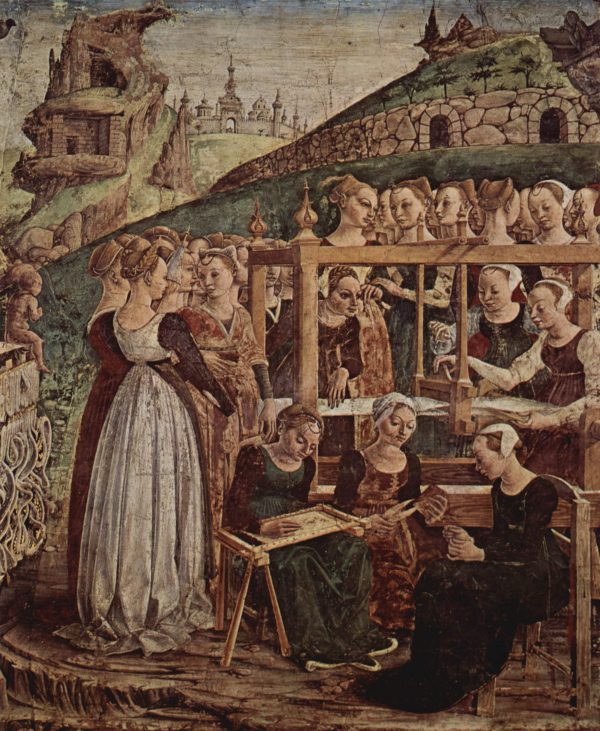
Arachne’s Hubris For generations, all around the world, people have told stories that warn us of the dangers of hubris. When we think we don’t need the gods, or that we’re better than the gods, that’s hubris, and it always leads – at least in the stories – to disaster. Take the Greek myth about Arachne, a young woman renowned for her skill in weaving. Her tapestries were so beautiful that royalty came from far and wide, and nymphs came out of the woodland, to admire her creations. According to legend, all weavers owed their talent to the goddess Athena, but Arachne refused to thank the goddess. Instead, she claimed…
-
Moral Outrage, 9/11, and Love
Fear and 9/11 This Sunday is September 11. Fifteen years ago on that day, when two planes flew into the twin towers of the World Trade Center, a third plane crashed into the Pentagon, and a fourth one fell into a field in Pennsylvania, thousands of people died, and our world was changed. We experienced vulnerability in a way we never had before. Now we tolerate long lines at airports and profile people with brown skin in the hope that we will be safe. The threat of terrorism frightens us, although the number of terrorist attacks in the United States has gone down significantly from 1970. Even if you count…
-
Meaning and the Fruits of Our Labor
What Is the Fruit of Our Labor? In her poignant song, “Mercy Now,” Mary Gauthier writes, about her father, that the “fruits of his labor fall and rot slowly on the ground.” The image haunts me. Since it’s meant to be experienced, poetry loses something when we try to explain it, and yet I can’t help but wonder what this means. Is Gauthier saying that all the work he’s done over the years made no difference, that what he built has fallen apart? I think of an apple tree in a neighbor’s yard behind our house. Probably a hundred years old, the tree stands about 30′ tall, loaded with little,…